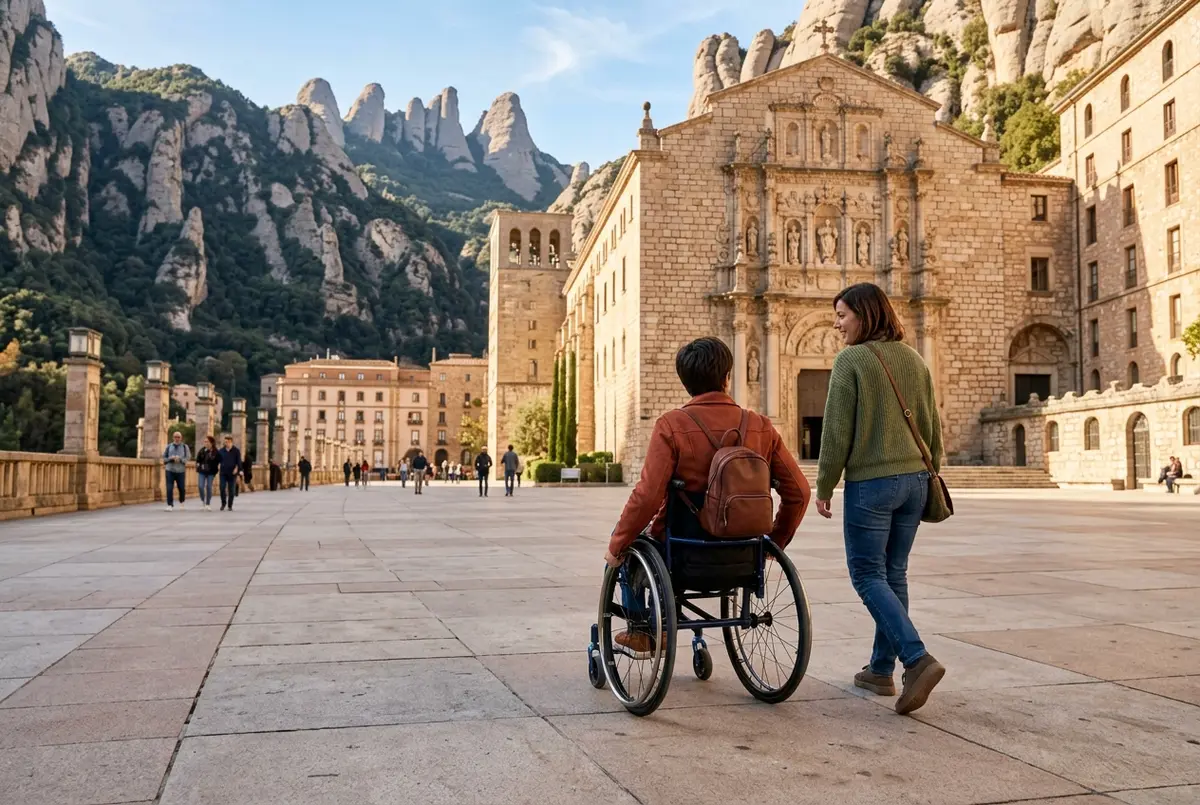
Montserrat accessibility comes down to one honest split: the monastery core is genuinely manageable for most mobility needs, while the mountain around it is not. Here’s what I’d actually do first: separate your plan into “the part at the top that’s mostly flat” and “the part on the trails that isn’t,” because almost every accessibility question about this mountain traces back to that one line.
I’m reasoning through this from how the monastery plaza, the mountain rides and the trail network are actually laid out, not from a personal visit of my own, since the right answer depends more on what kind of mobility need you’re planning around than on any single traveler’s experience. Once you know which parts of the mountain actually matter to your plans, weighing whether Montserrat is worth the trip at all is the next honest question to ask.
Is Montserrat Wheelchair Accessible?
Partially, and I’d be specific about where that line sits rather than giving a blanket yes or no. The basilica plaza, the main square and the paved paths immediately around them are flat and manageable for a wheelchair or a walker. Past that core area, the ground gets uneven fast, and most of the natural park’s trails were never built with step free access in mind.
My honest read is that Montserrat rewards a mobility plan built around “stay near the top station and the plaza” rather than one that assumes you’ll wander the wider mountain. That’s not a small compromise, since the plaza and basilica are genuinely the heart of most visits anyway.
Which Is Easier for Limited Mobility: the Cable Car or the Cogwheel Train?
I’d lean toward the cogwheel train for most mobility needs, since it runs on fixed rails in an enclosed carriage with a steadier boarding process than the cable car’s open-air cabin. Our cable car versus cogwheel train comparison goes into the full difference between the two rides if you want more detail before choosing.
Neither ride is purpose built for wheelchairs, and both involve some walking and steps to reach the platform. If a specific mobility aid is involved, I’d contact the operator of whichever ride you’re booking ahead of time rather than assume either station will accommodate it without notice.
Can You Visit the Basilica Without Climbing Stairs?
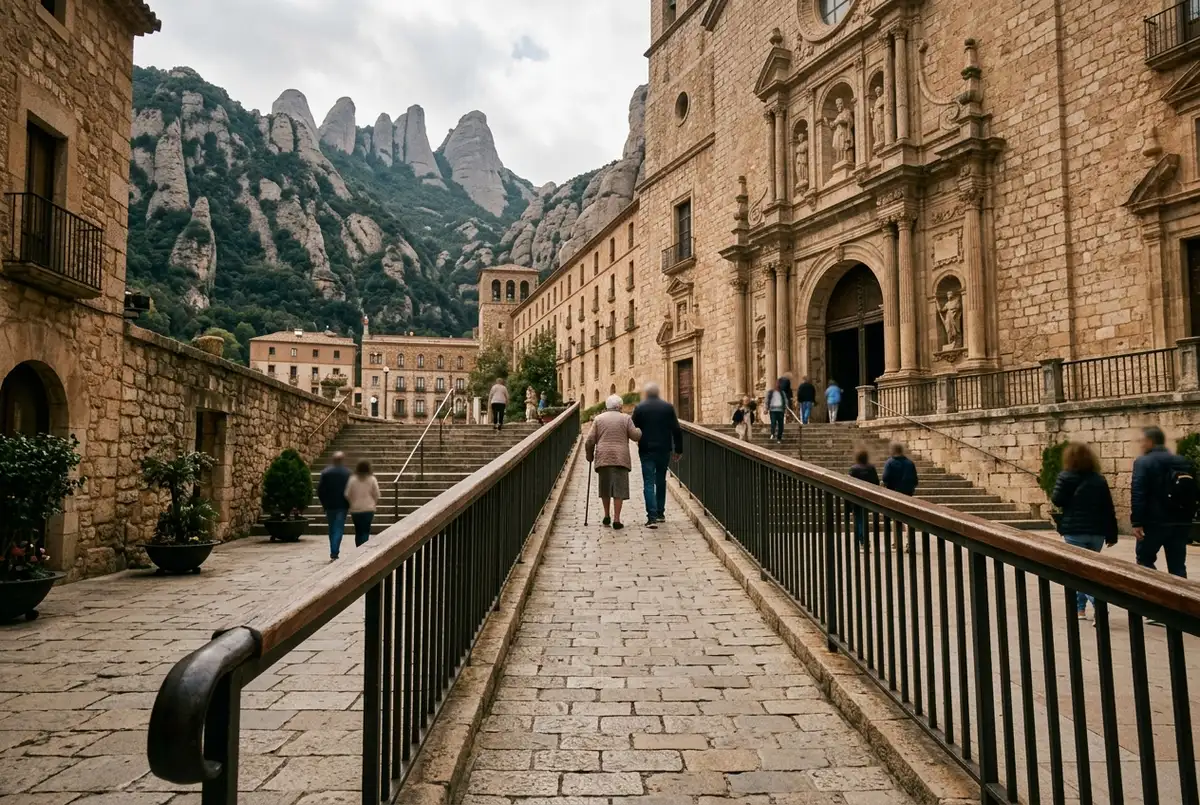
Yes, for the most part. The main approach to the Basilica of Santa Maria de Montserrat runs through the plaza on level ground, and the main nave is accessible without needing to climb a flight of stairs. Seeing the Black Madonna up close behind the altar is the one part of a basilica visit that typically does involve a short staircase and a narrow passage.
I’d treat the plaza and the main nave as the reliably accessible core of a basilica visit, and the Black Madonna viewing as a separate decision to make once you know whether that particular route works for you.
What About the Museum and Seeing the Black Madonna Up Close?
This is where I’d slow down and ask before committing. The Museu de Montserrat has multiple levels, and the narrow stairway up to the chamber behind the altar where the Black Madonna sits is the part of the whole visit least suited to a wheelchair or a mobility aid. Neither spot is impossible for every visitor, but neither is a sure thing either.
I wouldn’t book a tour assuming either of these is included in an accessible way. I’d rather ask the operator directly, or check with the monastery’s own visitor services, than discover the answer on the day.
Is Montserrat Good for Older Visitors Who Don’t Want to Hike?
Yes, genuinely so, and I’d actively recommend it for that traveler. The plaza, the basilica’s main nave, the market stalls and several of the closer viewpoints near the top mountain-rail station are all reachable without serious walking, which makes a half-day visit a realistic plan for someone who wants the atmosphere and the view without any real hiking.
My honest take is that older visitors who skip the trails entirely still get most of what makes Montserrat worth the trip. The jagged rock scenery is visible from the plaza itself, not just from deep in the national park.
Which Montserrat Tour Is Easiest for Mobility Needs?
I’d point toward the Montserrat cogwheel, Black Madonna and winery tour as the least physically demanding option in our lineup. It is built around a guided monastery walk and free time at the plaza, with the cogwheel train as a booked-in option, rather than any hiking on uneven trail. The half-day structure also keeps the day shorter, which matters for anyone pacing themselves around a mobility concern.
By contrast, I’d steer clear of the monastery, cable car and easy hike tour if mobility is a real concern, since the operator itself states it isn’t recommended for limited mobility, and the horseback riding option sets its own firm physical requirements. Knowing which products to skip is as useful here as knowing which one to book.
What Should You Confirm Before Booking If You Have Mobility Needs?
I’d call or email the operator directly before paying, rather than assume a tour description covers every detail that matters to your specific situation. Ask about the exact walking distance from the meeting point, whether the cogwheel train or cable car is included or optional, and whether the Black Madonna viewing and museum are part of the plan you’re buying.
Arrangements at Montserrat can change with maintenance schedules and seasonal crowding, so I’d treat anything written here as a planning baseline and confirm the current setup officially before you travel, especially if a specific mobility aid needs particular accommodation.
Does Weather Affect Accessibility at Montserrat?
It can, more than people expect. Our weather and seasons guide covers this in more depth, but the short version is that wet stone around the plaza and strong wind affecting the cable car both make an already-marginal route less reliable. I’d build in a buffer for weather if a mobility need makes you less able to adapt on the fly.
Is Montserrat a Good Day Trip for Mixed-Mobility Groups?
Yes, with some planning. A group with one member who can hike and another who can’t doesn’t need to split up entirely. Our guide to visiting with kids covers a similar mixed-pace situation, and the same logic applies here: let the plaza, the rides and the viewpoints near the top station be the shared plan, and treat any trail walking as optional for whoever in the group wants it.
I’d set expectations with the group beforehand rather than discover the mismatch on the day. Montserrat handles a mixed-pace group well as long as everyone agrees up front on what the shared itinerary actually includes.
How Much Time Should You Plan If Mobility Is a Factor?
I’d lean toward our day trip itinerary guide and plan on the shorter end of its estimates. Moving at a slower pace through the plaza and basilica takes longer than a typical visitor’s timeline assumes, and I’d rather build in extra time than rush between the ride up and the ride back. The basilica’s modesty rule still applies regardless of mobility needs, so our dress code and packing guide is worth a quick read alongside this one.
My Honest Verdict
I’d call Montserrat genuinely workable for most mobility needs, as long as the plan stays centered on the plaza, the basilica’s main nave and a mountain ride rather than the trail network. The honest caveat is the Black Madonna viewing and the museum, both of which involve stairs that aren’t a sure thing for every visitor. If accessibility is central to your decision, confirming the current setup directly with whichever tour or the monastery’s own visitor services beats relying on any single page, this one included.
Once you’ve settled whether the mountain itself fits your plans, our full verdict on whether Montserrat is worth visiting weighs it against the other traveler types who make the trip, and every Montserrat tour and ticket laid out in one place is worth a look once you know which products fit your mobility needs.
Frequently Asked Questions
Is the Montserrat cable car wheelchair accessible?
Not reliably. The cable car involves some walking and steps to reach the platform, and the cabin itself isn’t purpose built for wheelchairs. I’d contact the operator directly before relying on it.
Is the cogwheel train easier than the cable car for mobility needs?
Generally yes, since it boards from a fixed platform with a steadier process than the cable car’s open-air cabin, though neither is a guaranteed fit for every mobility aid.
Can you see the Black Madonna if you use a wheelchair?
It’s uncertain. The route to the chamber behind the altar typically involves a narrow staircase, which is the least accessible part of a basilica visit. I’d check with the monastery or your tour operator before counting on it.
Are there accessible restrooms at Montserrat?
Facilities exist near the plaza and the main visitor areas, though I’d confirm current availability with your tour operator rather than assume every facility meets a specific accessibility standard.
According to Wikipedia’s entry on Santa Maria de Montserrat, the monastery sits within a protected natural park on a steep, rocky massif, which is exactly why the terrain beyond the plaza stays uneven and largely undeveloped rather than smoothed into accessible pathways.