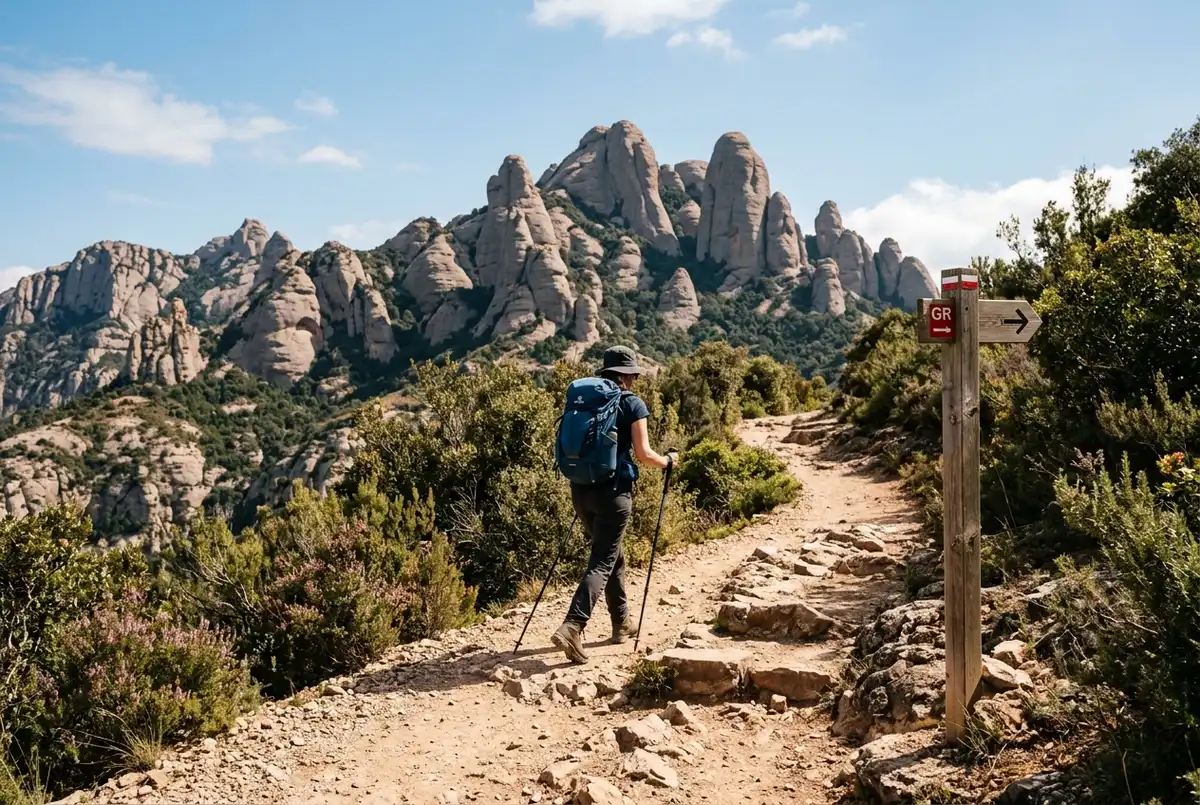
Montserrat hikes from Barcelona range across a genuinely wide spread, from a flat 20 minute walk down to a holy cave to a demanding round trip up the mountain’s highest peak. Here’s what I’d actually do before picking a trail: be honest with yourself about how many hours of walking you actually want, because the mountain offers a real option at nearly every level, and picking the wrong one is the single biggest way to turn a good day into a hard one.
I’m reasoning through this from how the marked trail network, the funicular access points and the terrain itself are actually laid out, not from a personal hike of my own, since the right trail depends more on your fitness and time than on any one hiker’s favorite route. Given how much the right pick depends on exactly how much ground you want to cover and for how long, matching a Montserrat tour’s duration and effort to how much walking you actually want to do is worth doing before you lock in a trail.
What Is the Montserrat Trail Network Actually Like?
Montserrat Natural Park has a genuine network of marked trails radiating out from the monastery and the two upper funicular stations, Sant Joan and Santa Cova. Signage is generally clear and color coded by route, and the rock itself, the same conglomerate pinnacles visible from Barcelona on a clear day, frames nearly every path.
I’d describe the network as well organized but genuinely varied in difficulty, which is exactly why “is Montserrat good for hiking” doesn’t have one simple answer. The honest answer depends entirely on which specific trail you’re asking about.
How Do the Main Montserrat Trails Compare?
| Trail or activity | Typical time | Difficulty | Best for |
|---|
| Santa Cova path | 20 to 30 min each way | Easy | Families, first-timers, anyone short on time |
| Sant Joan loops and viewpoints | 30 min to 1.5 hours | Moderate | Visitors who want real terrain without a big commitment |
| Sant Jeroni summit | A few hours round trip | Hard | Fit, experienced hikers chasing the best views |
| Horseback riding trails | About 1 hour in the saddle | Low physical effort | Anyone who wants the scenery without walking it |
I’d read this table as a starting point for matching your fitness and schedule to a route, not a ranking of which one is “best.” Each row suits a genuinely different traveler, and the mountain is honestly better for having all four options rather than funneling everyone toward the same trail.
What’s the Easiest Montserrat Hike?
The walk down to Santa Cova from the monastery is the easiest real trail on the mountain, a paved and stepped path that takes most walkers 20 to 30 minutes each way with a modest elevation change. Our Santa Cova guide covers the chapel and the apparition legend tied to the site if the history interests you as much as the walk itself.
I’d recommend this one without hesitation for almost anyone, including families and older visitors who want to feel like they’ve hiked without committing to real trail terrain. It’s a meaningfully different experience from the plaza, just scaled down from the mountain’s harder routes.
What’s a Moderate Montserrat Hike?
The trails looping around the Sant Joan funicular station, including the short walk out to Mirador dels Apòstols, sit in the moderate range, with some uneven rock underfoot but nothing that demands technical skill or serious stamina. Most of these loops run somewhere between 30 minutes and an hour and a half, depending on which viewpoint you’re chasing.
I’d call this the sweet spot for a visitor who wants to genuinely feel the mountain’s terrain without signing up for a multi-hour commitment. It’s also where the easy guided hike on our monastery, cable car and easy hike tour spends most of its time on foot.
What Does the Sant Jeroni Summit Hike Involve?
Sant Jeroni is the highest point of the Montserrat massif, and the hike up to it is the most demanding marked route on the mountain, typically a few hours round trip from the Sant Joan funicular station with real elevation gain and some exposed sections near the top. Our Sant Jeroni hike guide breaks the route down in more detail, including what a realistic round-trip time actually looks like.
I’d only point a fit, experienced hiker toward this one. It rewards the effort with the best views on the entire mountain, but it isn’t a casual add-on to a day that already includes the monastery and the museum.
Most hikers start from the Sant Joan funicular station rather than walking all the way up from the monastery itself, which cuts a meaningful chunk of elevation gain out of the day. I’d use the funicular for that first leg regardless of fitness level, since it’s simply the more efficient way to reach the trailhead and leaves more energy for the actual summit push.
Are There Rock Climbing or Via Ferrata Routes at Montserrat?
Yes, Montserrat’s conglomerate rock is a known destination for climbers and via ferrata routes, not just hikers on foot. The same pinnacles that make the mountain photogenic from a distance are a genuine draw for people who want to get on the rock itself rather than walk around it.
I wouldn’t attempt either without proper gear or a dedicated specialist operator, since this is a different category of activity from anything on our standard tour lineup. If climbing specifically is what you’re after, I’d search out an operator who specializes in Montserrat’s routes directly rather than expect a general sightseeing tour to cover it.
What’s the Best Time of Year to Hike at Montserrat?
Spring and autumn are where I’d point most hikers, since summer heat on an exposed trail like the Sant Jeroni route is genuinely unpleasant, and winter can bring cold wind and occasional ice on higher sections. Our weather and seasons guide breaks the climate down month by month if you’re planning specifically around trail conditions rather than just a comfortable day at the monastery.
I’d still hike in summer if that’s the only time you have, just earlier in the day and with more water than you think you need. The easier, shorter trails stay reasonable year round in a way the summit route doesn’t.
How Crowded Do the Montserrat Trails Get?
The paths closest to the monastery and the Santa Cova walk see real foot traffic, especially midday and on weekends, simply because they’re close to where every visitor already is. The trails further out toward Sant Jeroni thin out noticeably, since fewer visitors commit to the longer hike.
I’d actually use that to my advantage. If a quieter trail matters to you, walking further out rather than lingering on the paths right around the plaza is the more reliable way to find it, rather than hoping for a quiet day near the monastery itself.
What Wildlife Might You See on a Montserrat Hike?
The natural park is home to birds of prey that nest on the mountain’s cliffs, along with typical Mediterranean scrub vegetation and pine forest lower down the slopes. I wouldn’t plan a hike around guaranteed wildlife sightings, since that’s never a sure thing on any trail, but the terrain itself supports a genuinely different ecosystem from the city you just left.
I’d keep an eye on the sky on the more exposed sections, since raptors riding the thermals around the peaks are one of the more memorable sights the longer trails offer, independent of whatever else you came for.
Is There a Way to See the Mountain Without Walking the Trails?
Yes, and I’d genuinely recommend it for anyone who wants the scenery without the physical commitment. Our horseback riding tour guide covers the one product in our lineup that puts you in the saddle instead of on foot, following similar national park trails from a different vantage point entirely.
The cable car and cogwheel train also both open up genuine mountain views without any hiking at all. Our cable car versus cogwheel train guide compares the two if a ride up is more your style than a walk.
Can You Combine Hiking with a Winery Visit or the Black Madonna?
Yes, though I’d be realistic about how much you can fit into one day. The winery add-on that most full-day tours offer pairs fine with a short, easy hike on the same day. A longer hike toward Sant Jeroni, on the other hand, genuinely competes with the time a winery lunch or a Black Madonna viewing slot needs.
My honest take is that trying to fit the summit hike, the winery and the Black Madonna into one day is where good intentions fall apart. I’d pick the one or two that matter most to you and plan the rest of the day around them, rather than attempting all three and rushing every part of it.
Do You Need Hiking Experience to Walk at Montserrat?
Not for the easier trails, no. The Santa Cova walk and most of the loops near Sant Joan are manageable for anyone comfortable with a reasonable amount of walking on uneven ground. The Sant Jeroni summit route is a different story, and I’d want some prior hiking experience, or at least solid general fitness, before attempting it.
My honest take is that Montserrat is a genuinely good introduction to hiking for someone who’s never done a real trail hike before, as long as they stick to the easier routes and don’t let the summit’s reputation talk them into something beyond their level.
What Should You Bring for a Montserrat Hike?
I’d pack more water than feels necessary, since there’s limited reliable access to it once you’re on a trail, along with proper walking shoes rather than sandals or city sneakers. A light jacket is worth carrying too, since wind and temperature both shift more on exposed ridgelines than they do around the sheltered monastery plaza. Our tips before you go guide covers the broader packing list if you want the full picture beyond hiking gear specifically.
What Should First-Time Montserrat Hikers Know?
I’d go in with modest expectations about distance and let the mountain surprise you, rather than the reverse. A route that looks short on a map can run longer than expected once you factor in stairs, loose rock and the occasional detour around a closed section. Starting with an easy or moderate trail before even considering Sant Jeroni is the single best piece of advice I’d give a first-timer.
I’d also plan your return trip before you set out, specifically which funicular or trail gets you back to the monastery and roughly when the last ride down runs. Being stuck figuring that out at the end of a long hike is a worse way to end the day than any amount of planning beforehand.
Is Montserrat Hiking Safe?
Generally yes on the marked trails, provided you respect what each route actually demands. The bigger risk I’d flag isn’t the terrain itself, it’s underestimating a route’s length or difficulty based on how short it looks on a map. I’d always check the current state of a trail and weather conditions before setting out, especially before anything leading toward Sant Jeroni.
Which Montserrat Tour Should You Book for Hiking?
I’d point most hikers toward the Montserrat monastery, cable car and easy hike tour, which pairs a certified mountain guide with an easy trail walk rather than leaving you to navigate the network alone. At €74, it’s the one product in our lineup built specifically around walking the national park rather than just viewing it.
If horseback riding appeals more than walking, our horseback riding tour covers similar ground from the saddle instead, and it’s worth a look before assuming hiking is the only active option here.
How Does Hiking Fit Into a Full Montserrat Day Trip?
I’d treat hiking as one piece of the day rather than the whole plan, since most visitors also want some time at the basilica and the plaza. A moderate loop near Sant Joan fits comfortably alongside a half-day monastery visit, while the Sant Jeroni summit realistically eats most of a day on its own. Our day trip itinerary guide works through the hour-by-hour pacing if you’re trying to fit a hike alongside everything else Montserrat offers.
My Honest Verdict
I’d call Montserrat a genuinely strong hiking destination for Barcelona, not just a monastery with some paths nearby. The real skill is matching the route to your actual fitness and time rather than defaulting to the summit because it sounds the most impressive. Pick the Santa Cova walk if you want an easy taste of the terrain, a Sant Joan loop if you want more without overcommitting, and Sant Jeroni only if you’re genuinely ready for it.
Montserrat’s ticket layers and the trail network work independently of each other, so once you’ve settled on how much walking you want, our Montserrat tickets guide is worth a look for the rest of the day’s logistics. And if you’re still deciding whether the mountain is worth the trip at all, our honest verdict on Montserrat weighs it against every kind of traveler, hikers included.
montserrat tours and hikes compared →
Frequently Asked Questions
How long is the hike to Sant Jeroni from Montserrat?
Plan on a few hours round trip from the Sant Joan funicular station, longer if you’re starting from the monastery itself. It’s the most demanding marked route on the mountain.
Is the walk to Santa Cova difficult?
No, it’s the easiest real trail at Montserrat, a paved and stepped path roughly 20 to 30 minutes each way with a modest elevation change.
Do I need a guide to hike at Montserrat?
Not for the easier marked trails, though a guide adds real value on the summit route or if you’d rather not navigate the network alone. Our easy hike tour includes a certified mountain guide for exactly that reason.
Can beginners hike at Montserrat?
Yes, on the easier trails. I’d start with the Santa Cova walk or a short loop near Sant Joan rather than attempting Sant Jeroni on a first visit.
What shoes should I wear for Montserrat hiking?
Sturdy, broken-in walking shoes or light hiking boots rather than sandals or city sneakers. The rock and stepped paths get uneven even on the easier trails, and good grip matters more here than it does around the plaza.
According to Wikipedia’s entry on Santa Maria de Montserrat, the monastery sits within a protected natural park on a distinctive conglomerate rock massif, which is exactly the terrain that shapes every trail covered above, from the easy stepped path down to Santa Cova to the exposed ridge near the summit.