Santa Cova: The Holy Cave Where the Black Madonna Legend Began
See prices From 39 EUR · Free cancellation available
Contents
Santa cova montserrat, the holy cave, is the specific site tradition names as where the Black Madonna statue was first discovered, and it’s one of the few stops on a Montserrat day that puts you directly inside the apparition legend rather than just hearing about it. Here’s what I’d actually do: treat the walk down to the cave as a real part of the visit, not an optional extra you skip if you’re short on time.
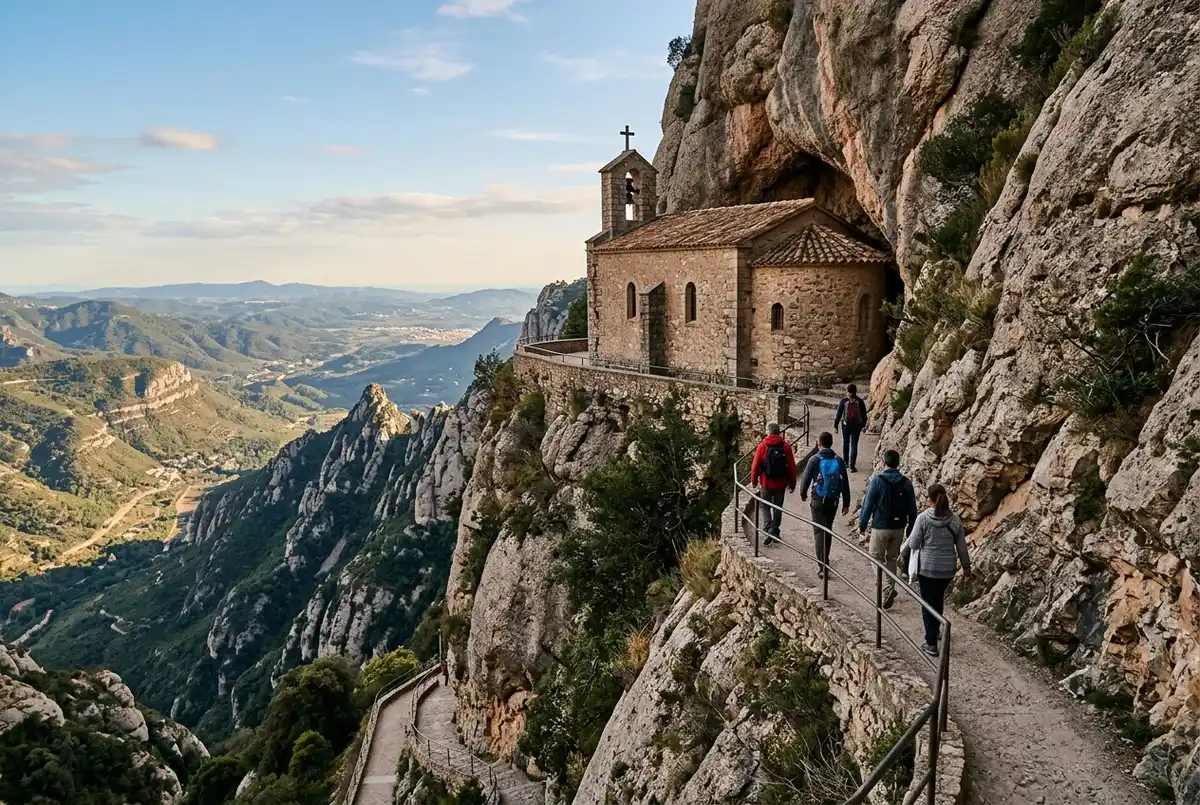
“Santa Cova” translates to “holy cave” in Catalan, and it refers to a specific cave in the rock face below the Montserrat monastery where the apparition legend is set. A chapel was built directly into and around the cave mouth centuries ago, and it has been maintained and expanded since, including decorative work tied to the broader devotion that grew up around the Black Madonna.
I’d think of it less as a single tourist stop and more as the physical anchor for the entire Montserrat legend. The monastery above grew up because of what tradition says happened here first. Without this cave, there’s no reason the story places the statue on this specific mountain at all.
Check prices & dates
Ready to visit?
Book your tickets in advance: popular time slots sell out.
What Does the Path Down to Santa Cova Actually Involve?
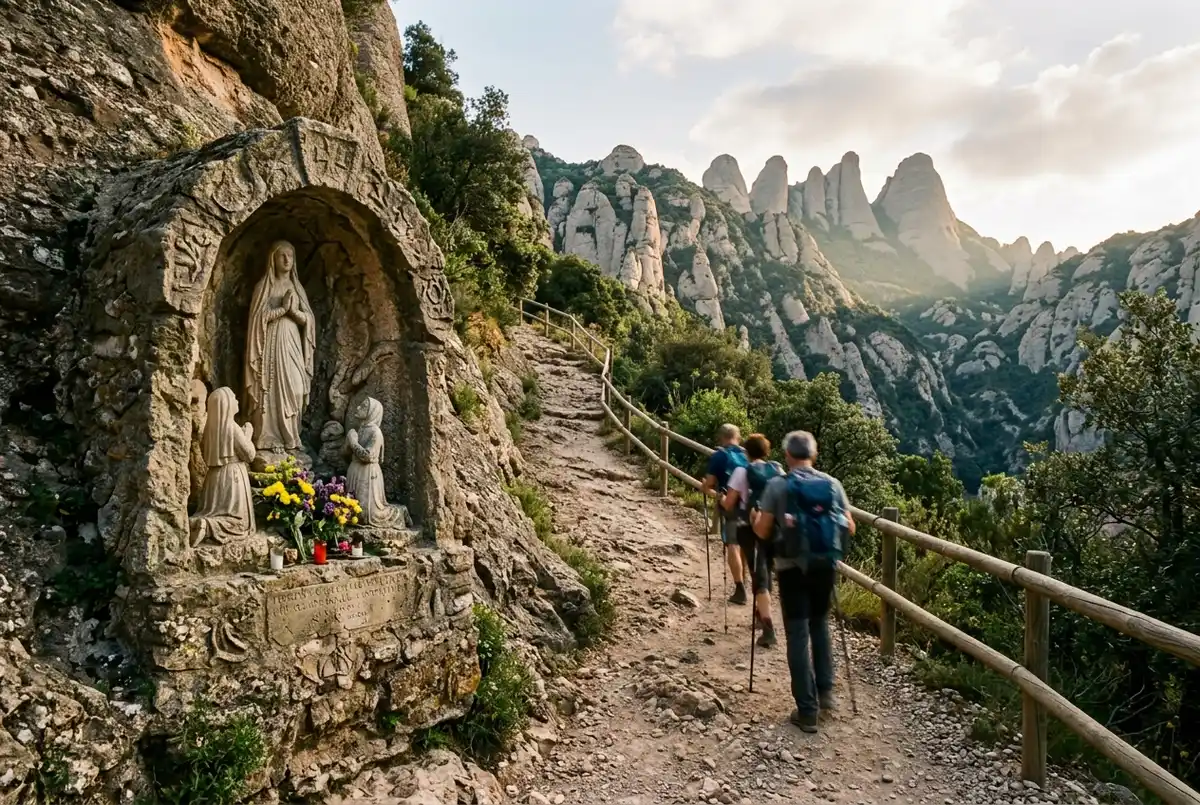
A marked path leads from near the monastery down to the cave, lined with sculptures and small chapel stations depicting scenes from the apparition story, some created by sculptors connected to the Catalan Modernisme movement in the early 20th century. It’s a walk of maybe 20 to 30 minutes each way on a reasonably graded path, not a technical hike, though it does involve some uneven terrain and a modest descent.
I’d budget real time for this rather than rushing it between other stops. A funicular also covers part of the route for anyone who would rather not walk both legs. I’d personally walk down and ride the funicular back up, since the descent lets you actually see the sculpture stations at a pace that matches them.
Why Does This Specific Site Matter to the Apparition Story?
Tradition holds that shepherds noticed strange lights or music near this cave and found the statue already inside, and that repeated attempts to move her elsewhere failed, which the legend reads as a sign she chose to stay on the mountain. That choice is why the monastery sits where it does rather than in a more convenient or accessible location nearby.
My honest take: whether or not you take the legend literally, standing at the actual cave mouth does something a description in a guidebook can’t. You’re not reading about where a story supposedly happened; you’re standing in the specific spot the story names, which is a different kind of experience even for a purely secular visitor. Our monks of Montserrat guide covers how the modern monastic community still ties its purpose back to this exact site.
Is Santa Cova Included on Guided Montserrat Tours?
It depends on the specific tour, so I’d check the itinerary rather than assume. The Montserrat cogwheel, Black Madonna and winery tour names free time at the summit that can be used for this kind of walk, among other options like the market stalls and viewpoints, rather than guaranteeing a guided stop specifically at Santa Cova.
I’d ask about the exact itinerary before booking if this cave specifically is a priority for you, since “free time at the summit” covers several possible uses of that window and Santa Cova isn’t always the one a guide will steer you toward by default. If it’s the single thing you most want to see beyond the monastery itself, I’d build in extra time rather than hope it fits, and I’d pair the walk with a check of the Escolania’s daily singing if timing both in one visit matters to you.
What Should You Expect to See at the Chapel Itself?
The chapel built around the cave entrance is modest in scale compared to the main basilica, reflecting its origin as a shrine marking a specific, intimate site rather than a grand destination in its own right. Decorative elements inside and around it reference the apparition story directly, giving visitors a clear sense of what the space commemorates even without much prior context.
I wouldn’t expect a long visit inside the chapel itself; it’s the kind of stop that rewards a few quiet minutes rather than an extended look. What takes the real time is the path to get there and back, and the sculpture stations along the way, which is where I’d actually plan to linger if the full story interests you.
Is Santa Cova Suitable for Visitors With Mobility Needs?
The path involves a genuine descent with some uneven, unpaved sections, which makes it harder going than the flat, paved areas right around the monastery and basilica. The funicular helps by covering part of the route mechanically, but it doesn’t eliminate the walking entirely, since there’s still ground to cover between the funicular station and the chapel itself.
I’d confirm current access arrangements directly with the monastery or your tour operator if mobility is a specific concern, rather than assume either way based on a general description like this one. It’s the kind of detail that can change with maintenance work or seasonal conditions, so checking close to your visit date beats relying on anything written months in advance.
What’s Along the Path Besides the Sculpture Stations?
Beyond the Modernisme-era sculptures depicting the apparition story, the walk offers views over the valley below that most visitors rushing between the bus and the basilica never see. The mountain’s distinctive rock formations, the same jagged peaks visible from Barcelona on a clear day, feel considerably closer and more dramatic from partway down this path than they do from the main monastery plaza.
I’d bring a camera specifically for this stretch, honestly, since the angle on the rock formations here differs enough from the standard monastery-plaza shot that it’s worth the extra few minutes to capture. It’s one of the better photo opportunities on the mountain that a lot of day-trippers simply miss by sticking to the summit area.
What Time of Day Works Best for the Walk Down?
Morning tends to work better than afternoon, mainly because the path sits in partial shade from the mountain itself earlier in the day, which matters more than it sounds like during the warmer months. Afternoon crowds at the main monastery plaza also tend to build up as day-trip buses arrive mid-morning, so an earlier visit to Santa Cova often means a quieter path with fewer people at the sculpture stations.
I’d pair this walk with an early arrival at Montserrat generally if your tour or ticket allows it, since the combination of better light and fewer crowds makes a real difference to how the whole stop feels. A rushed, crowded version of this walk late in the day loses a lot of what makes it worth doing in the first place.
Should You Prioritize Santa Cova on a Short Visit?
If you’re on a tight half-day schedule, I’d rank it below the monastery and basilica visit itself, since that’s the core of any Montserrat trip regardless of how much time you have. If you have a full day or specifically came for the apparition legend, I’d move it up the list, since it’s a meaningfully different experience from the monastery buildings above.
I wouldn’t skip it entirely if you have any flexible time at all, honestly. It’s one of the more atmospheric, less crowded parts of a Montserrat visit precisely because a lot of day-trippers don’t make it down here, sticking instead to the summit area right around the basilica and the viewpoints.
Frequently Asked Questions
How long does the walk to Santa Cova take?
About 20 to 30 minutes each way on the marked path, depending on your pace and how long you stop at the sculpture stations along the way.
Is there a funicular to Santa Cova?
Yes, a funicular covers part of the route between the monastery area and the Santa Cova path, which some visitors use for one leg of the trip rather than walking both ways.
Is the path to Santa Cova difficult?
It’s a graded path rather than a technical trail, suitable for most reasonably fit visitors, though it does involve some uneven terrain and a modest descent that’s worth knowing about in advance.
Can you go inside the cave itself?
A chapel is built into and around the cave mouth, and visitors can view the shrine, though access to the deepest part of the natural cave is limited by the structure built around it.