The Monks of Montserrat: Life Inside a Working Monastery Today
See prices From 39 EUR · Free cancellation available
Contents
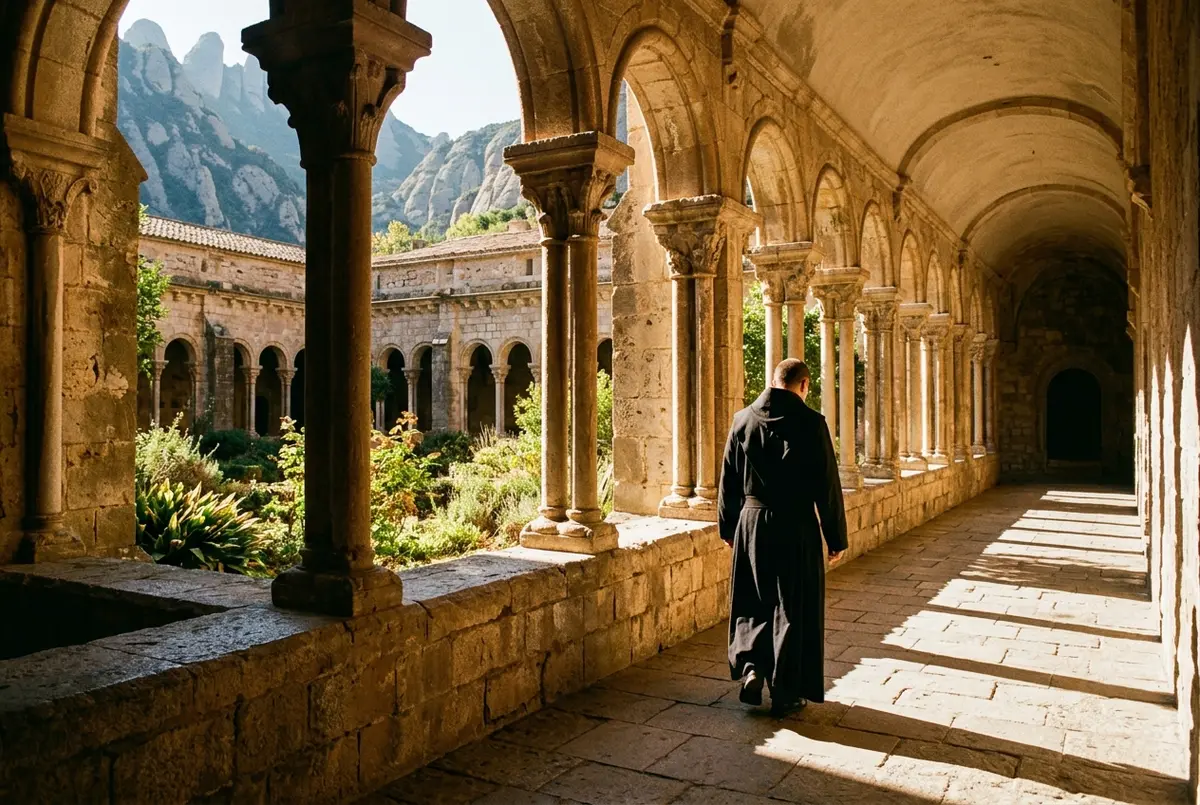
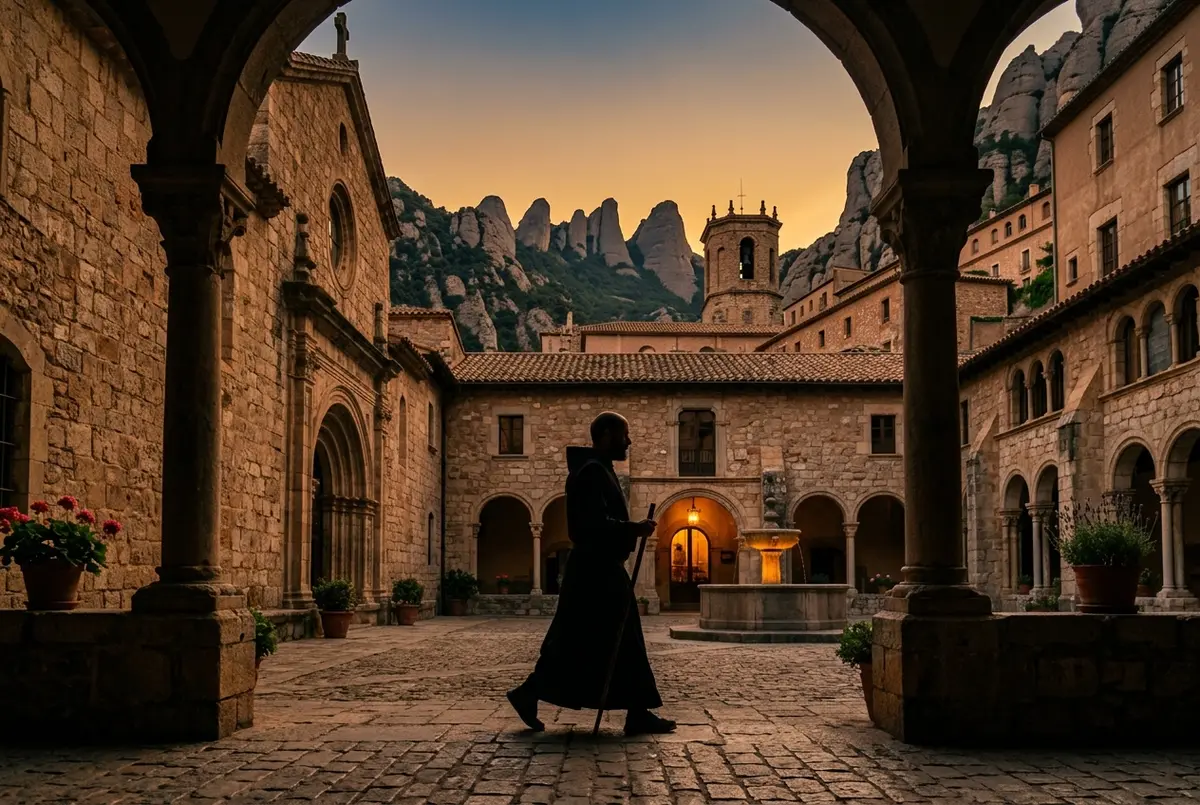
Montserrat monks have maintained a continuous Benedictine presence on this mountain since the monastery’s founding in the 11th century, and they still live, work, and pray here today, not as a historical reenactment but as an ongoing religious community. Here’s what I’d actually do with that fact: let it reshape how you think about the visit, from a monument tour into a visit to someone’s actual home.
Most of what visitors see, the basilica, the Black Madonna chamber, the museum, sits alongside a working community that keeps its own rhythm regardless of the tour buses arriving outside, a rhythm a handful of our Montserrat tours still build their timing around. If you want the fuller picture of why this community exists at all, our history of the Black Madonna covers the devotion the monks have maintained for nearly a millennium, and the apparition legend behind that devotion explains why a monastery was built on this exact spot in the first place.
Is Montserrat Actually Still a Working Monastery?
Yes, genuinely. This isn’t a historic site preserved purely for tourism; monks follow the Rule of St. Benedict here today the same way Benedictine communities have for centuries, structuring their day around prayer, work, and community life. The scale of visitor traffic Montserrat sees, hundreds of thousands of people a year, runs alongside that religious life rather than replacing it.
I think this is the single most-missed fact among casual visitors. A lot of people treat Montserrat as pure spectacle: the mountain, the architecture, the views. Is montserrat still a working monastery is actually one of the most common questions I’d want answered before arriving, because the honest yes changes how I’d suggest behaving once you’re there, quieter, more deferential, less like a photo-stop and more like a guest.
Check prices & dates
Ready to visit?
Book your tickets in advance: popular time slots sell out.
What Does a Benedictine Monk’s Day Actually Look Like?
Benedictine life structures the day around a cycle of prayer, called the Divine Office, interspersed with work and study, following a pattern that traces back to St. Benedict’s original Rule from the 6th century. At Montserrat specifically, that work has historically included everything from running the printing press and publishing house to maintaining the monastery’s extensive library and archives.
I’d resist the urge to picture monks as purely contemplative figures removed from practical work. The Benedictine tradition specifically values labor as part of spiritual life, not separate from it, which at Montserrat shows up in everything from the choir school’s teaching staff to the upkeep of a site that welcomes an enormous number of visitors every year.
Can Visitors Interact With the Monks?
Generally not in any direct, personal way as a typical day visitor. The monks’ living quarters and most of their daily routine are not open to tourists, and the areas visitors move through, the basilica, the museum, the public paths, are kept separate from the community’s private life by design.
I’d respect that boundary without reading it as unfriendliness. A working religious community needs some separation from the hundreds of thousands of visitors passing through each year simply to function, the same way any workplace or home would. What you do get to witness, like the Escolania’s performances or the walk down to Santa Cova, is a genuine, if limited, window into that life rather than a staged version of it.
How Many Monks Live at Montserrat Today?
The exact number shifts over time with new arrivals, deaths, and the broader trend of declining vocations across many European Benedictine communities, so I’d check the monastery’s own current figures rather than rely on any specific number here. What’s stayed consistent is the community’s commitment to maintaining the site’s religious function alongside its public role as a destination.
My honest take: the exact headcount matters less than the fact that the number is real and lived, not symbolic. This is an actual community making decisions about who joins, how the choir school is staffed, and how the monastery balances its spiritual mission against being one of Catalonia’s most visited sites.
What Work Does the Monastery Actually Do Beyond Religious Life?
Montserrat runs its own publishing house, one of the older continuously operating presses in Catalonia, producing religious, academic, and cultural titles that have nothing to do with tourism. The monastery also maintains a significant library and archive, preserving manuscripts and historical records that researchers and scholars consult independently of the millions of visitors who come purely to see the basilica.
I think this is worth knowing precisely because it’s so invisible to a typical day visitor. You walk past a working publishing operation and a serious archive without any obvious sign either exists, which is a good reminder that the parts of Montserrat open to tourism are a fraction of what the site actually does. The Benedictine value of balancing prayer with productive work shows up here as clearly as anywhere else on the mountain, and it’s part of why I’d push back on any description of Montserrat as a museum with a nice view attached.
How Does the Escolania Fit Into the Monks’ Daily Life?
The Escolania, the boys’ choir housed within the monastery, operates alongside the monks’ own community, with the boys receiving both education and musical training in a setting shaped by the same Benedictine rhythm of prayer and work. Their daily singing in the basilica is part of the monastery’s own liturgical life, not a performance scheduled separately from it.
I’d read our full Escolania guide if the choir specifically interests you, since it goes deeper into the schedule and history than makes sense to repeat here. The short version: hearing them sing is as close as most visitors get to witnessing the monastery’s actual daily rhythm rather than just its architecture.
Why Does the Monastery Welcome So Many Tourists If It’s Still Religious?
Partly necessity, partly mission. Montserrat has been a pilgrimage destination for centuries specifically because of the Black Madonna, so welcoming visitors, pilgrims and tourists alike, has always been part of the site’s purpose rather than a modern compromise forced on a once-private community. Tourism revenue also plays a practical role in maintaining a site this large and historically significant.
I wouldn’t see any tension in that combination, honestly. Montserrat benedictine monastery life has coexisted with visitors for its entire history; the specific scale and nature of tourism has changed with trains and cable cars, but the basic idea of outsiders coming to see the Black Madonna is as old as the monastery itself.
Should This Change How You Behave During Your Visit?
I’d say yes, modestly. Dress that covers shoulders and knees for the basilica, a quieter volume than you might use at a typical tourist site, and a general awareness that you’re moving through parts of someone’s actual spiritual home go a long way toward being a respectful guest rather than just another visitor passing through for a photo.
I wouldn’t overcorrect into stiff formality either. The monastery welcomes an enormous, diverse range of visitors every day, and ordinary courteous behavior is all that’s really expected. Knowing the community is real and active is enough to shift your mindset without needing a strict etiquette checklist to follow.
My honest final take: Montserrat rewards visitors who show up curious about more than the view. The mountain and the cable car ride are reason enough for plenty of people, and that’s fine, but knowing a living community sits at the center of it all adds a layer that’s easy to miss if you treat the whole day as scenery.
Frequently Asked Questions
Can you stay overnight at Montserrat monastery as a guest?
Some monasteries offer retreat accommodation to visitors seeking a religious or contemplative stay, and arrangements like this can exist at Montserrat too, though I’d confirm current availability and requirements directly with the monastery rather than assume a standard hotel-style booking process.
Do the monks give tours themselves?
Guided tours of the monastery and basilica are typically led by tour operators and guides rather than the monks personally, since the community’s time is largely occupied by its own religious and educational responsibilities.
Is Montserrat monastery Catholic specifically?
Yes, it’s a Catholic Benedictine monastery, part of the broader Benedictine order that follows the Rule of St. Benedict, with the Black Madonna devotion sitting within that Catholic tradition.
Has the number of monks at Montserrat changed over time?
Yes, like many European religious communities, vocation numbers have shifted over recent decades, though the monastery has maintained a continuous presence since its founding regardless of those fluctuations.
Does the monastery close to visitors on any days?
Sundays and religious celebrations can bring closures or restricted access to the basilica without much advance notice, since the community’s own liturgical calendar takes priority over the tourism schedule on those days. I’d build in some flexibility around your visit date if avoiding a closure matters to you.
Once you understand who actually lives on this mountain, our Montserrat tickets guide is the practical next step for choosing how to experience it yourself.
Montserrat Cogwheel, Black Madonna & Winery TourFrom €39