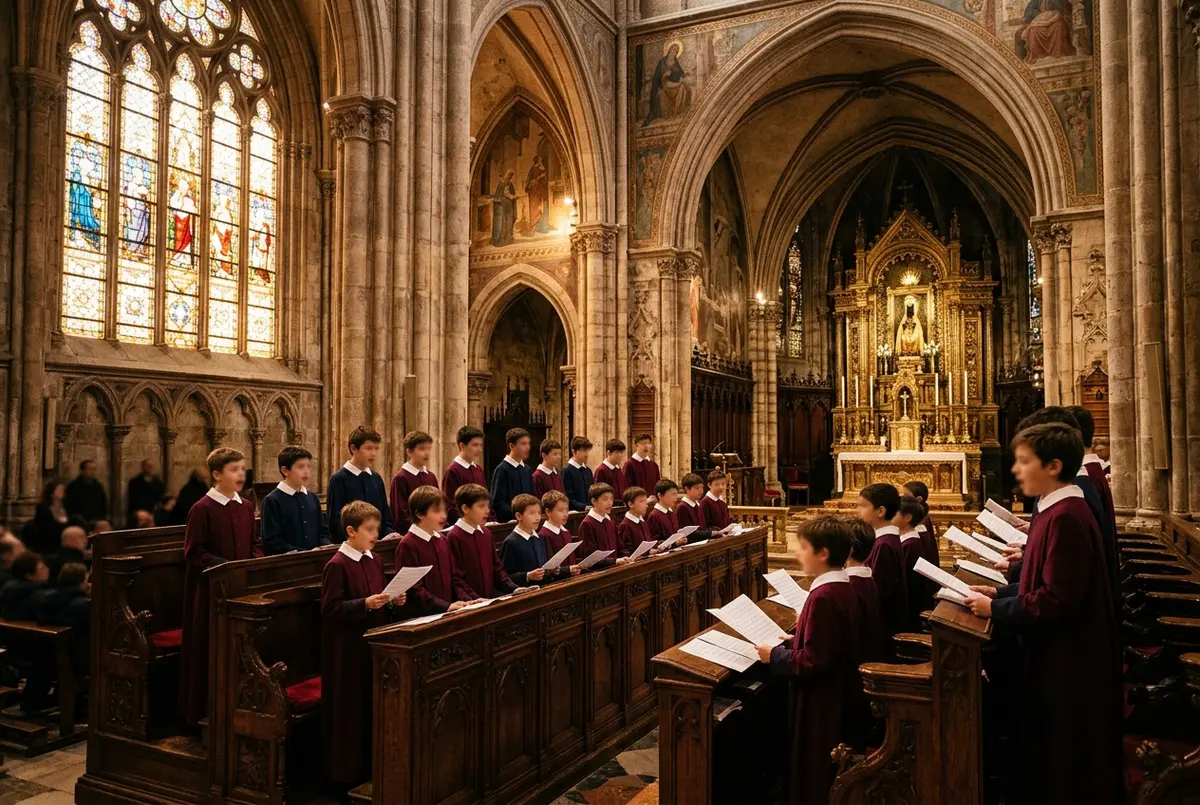
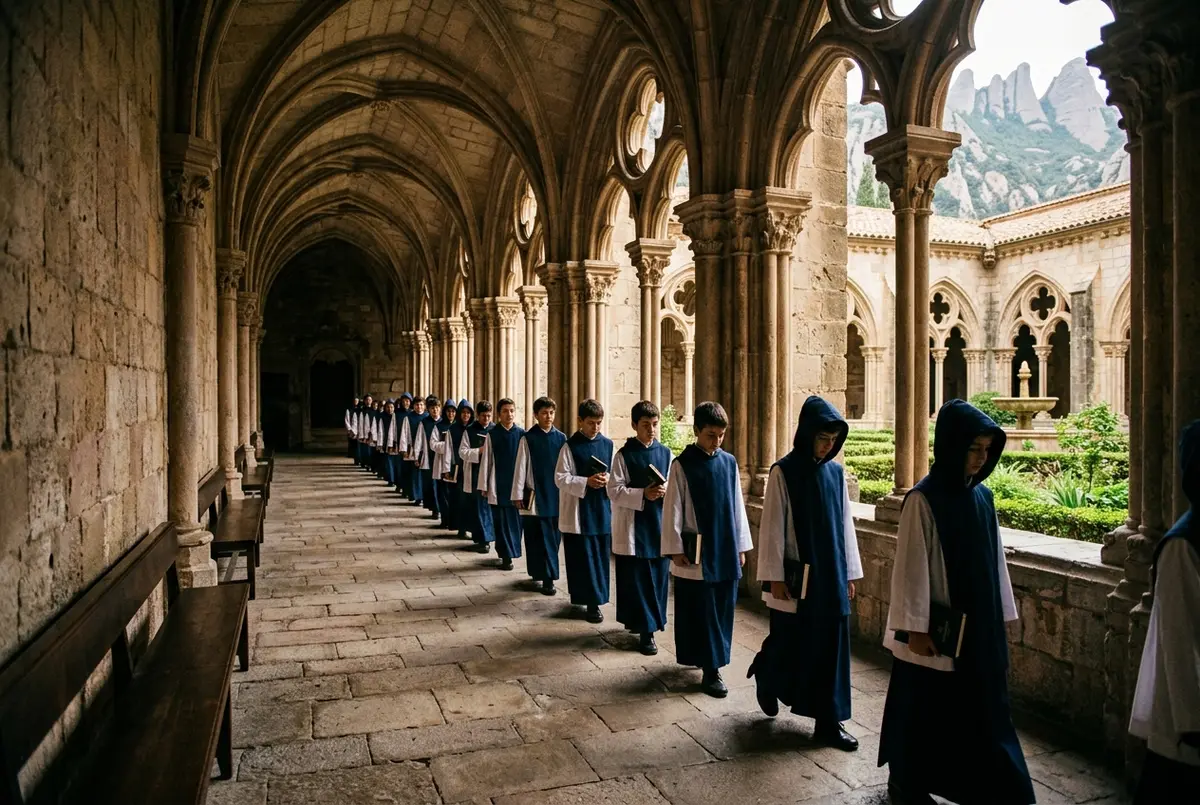
The Escolania de Montserrat: Europe's Oldest Boys' Choir
See prices From 39 EUR · Free cancellation available
Contents
The escolania de montserrat is a boys’ choir with roots stretching back centuries, widely cited as one of the oldest continuously operating choir schools in Europe, and it sings daily as part of the basilica’s liturgy in honor of the Black Madonna. Here’s what I’d actually do if hearing them matters to you: check the general daily pattern before you book, but don’t build your entire schedule around a guarantee the choir can’t always promise.
Several options on which Montserrat tour fits your day spend enough time at the monastery around midday that catching part of the choir’s daily singing is realistic, though it’s never listed as a guaranteed inclusion. If you want the fuller history behind why this choir exists at all, our Black Madonna history page covers the devotion the Escolania was built to serve, and the apparition legend and miracles behind her fills in why the monastery built a choir around her in the first place.
What Exactly Is the Escolania de Montserrat?
It’s a choir school for boys, housed within the monastery itself, that trains its students in music alongside a standard education, functioning as both a school and a performing choir. The boys typically live and study at the monastery during term time, a structure that has continued in some form for an extraordinarily long stretch of the monastery’s history.
I’d call it one of the more remarkable living traditions at Montserrat, honestly, more so even than the architecture around it. This isn’t a reenactment or a tourist performance; it’s an actual functioning school that happens to produce one of Europe’s most historically significant boys’ choirs as part of its purpose, inside the same working community our guide to the monks of Montserrat covers in more depth.
Check prices & dates
Ready to visit?
Book your tickets in advance: popular time slots sell out.
Sources generally trace the choir’s origins back to around the 13th century, which places it among the oldest choir schools of its kind still operating anywhere in Europe. The exact founding details are harder to pin down with precision than a modern institution’s records would be, which is typical for an organization this old.
My honest take: I wouldn’t get hung up on the exact century. What matters more is that this is a genuinely continuous tradition, not a modern revival dressed up in old language. The boys singing in the basilica today are part of an unbroken thread stretching back further than most European institutions of any kind.
When Does the Escolania Sing Each Day?
The choir typically sings around midday, often associated with the Salve and the Virolai, a hymn specifically written in Our Lady of Montserrat’s honor that functions as something close to an anthem for devoted Catalans. An evening performance sometimes follows as well, though the exact daily pattern can shift with the liturgical calendar, school terms, and holidays.
I wouldn’t treat any specific time as fixed without checking current information close to your visit, since schedules do change and the choir doesn’t perform during every period of the year, including school holidays. If timing it precisely matters to you, I’d confirm directly with the monastery rather than rely on a general guide like this one for the exact minute.
Can You Guarantee Hearing the Choir on a Guided Tour?
No tour in our lineup names a guaranteed choir slot as part of its itinerary. The Montserrat cogwheel, Black Madonna and winery tour and other guided options build in free time or a monastery visit around midday, which gives you a reasonable shot at overlapping with the choir’s typical singing window, but nothing in the booked itinerary locks it in.
I’d be honest with myself about this before booking specifically for the choir: if hearing them is the single most important part of your day, I’d research the current schedule as close to your travel date as possible and consider timing an independent visit around it, rather than relying entirely on a tour’s general midday window. Our half-day versus full-day comparison is worth reading too, since a longer day at the monastery simply gives you more chances to be in the right place when they do sing, and pairing that extra time with a walk down to Santa Cova makes good use of the window either way.
What Is the Virolai, and Why Does It Matter So Much?
The Virolai is a hymn written specifically in Our Lady of Montserrat’s honor in the 19th century, set to music that has since become closely associated with Catalan identity, not just religious devotion. It’s one of the pieces the Escolania sings as part of its regular performances, and hearing it in the basilica carries a weight that goes beyond an ordinary hymn, given how tightly it’s woven into Catalan cultural memory.
I’d learn the gist of what it’s about before you hear it, honestly, since knowing even roughly what the words mean changes the experience of hearing young voices sing it inside the exact building the hymn was written for. It’s a small bit of homework that pays off disproportionately for how little effort it takes.
Should You Build Your Entire Schedule Around Hearing Them?
I wouldn’t, and I’d say that even to someone who specifically traveled with the choir in mind. Weather, the liturgical calendar, school holidays, and ordinary schedule shifts all sit outside any tour operator’s control, which means a plan built entirely around one midday window carries real risk of disappointment if that window shifts on the day you happen to visit.
What I’d do instead is treat hearing the Escolania as the best possible outcome of a day that still works well without it. Build your schedule around the monastery visit, the basilica, and whichever other stops matter to you, and let the choir be a bonus if the timing lines up rather than the single point of failure for the whole trip.
Why Do People Specifically Travel to Hear Them?
The combination of the setting, a centuries-old basilica built around a venerated statue, and the sound of young voices trained specifically for this space creates an experience that a recording or video genuinely doesn’t capture. For some visitors, particularly those with any connection to choral music or Catholic liturgical tradition, hearing the Escolania becomes the single memory that outlasts everything else from the trip.
I think that reputation is earned, not hype. A choir that has survived and trained new generations of boys for the better part of a millennium, in the exact same space, performing the same devotional role, has an authenticity that’s genuinely hard to manufacture anywhere else. That continuity is also why the choir draws music scholars and students, not just tourists and pilgrims, treating it as a living example of a tradition most comparable European institutions lost centuries ago.
Is the Choir Only for Religious Visitors?
Not at all. Plenty of visitors with no particular religious connection still find the performance moving, partly because of the setting and partly because of what the tradition represents regardless of personal faith. I’d put it in the same category as visiting a historic site for its cultural weight rather than assuming you need to share the underlying religious tradition to get something out of it.
I wouldn’t force the comparison if choral music genuinely isn’t your thing, though. It’s a specific, fairly brief part of a Montserrat day, and missing it doesn’t undermine the rest of the visit, the monastery, the basilica, and the Black Madonna chamber all stand on their own regardless of whether the timing works out for the choir.
Frequently Asked Questions
How long does an Escolania performance typically last?
A single performance, such as the Salve or the Virolai, typically runs a matter of minutes rather than a full concert, since it’s part of the regular liturgy rather than a standalone show staged for visitors.
Do the boys perform every single day of the year?
No. School holidays and parts of the liturgical calendar mean the choir doesn’t sing daily year round, which is worth factoring in if you’re traveling outside the regular school term.
Is there a cost to hear the Escolania sing?
Hearing them as part of the regular basilica liturgy doesn’t carry a separate ticket cost beyond whatever entry applies to the basilica itself, which is generally free to enter.
Can you watch the Escolania boys outside of performances?
Generally no. They live and study within the monastery as part of their schooling, and public access is focused on the performances themselves rather than the students’ daily school life.
Do the boys sing anywhere outside the basilica itself?
Occasionally they perform or travel for special occasions beyond their regular basilica duties, though this isn’t something a typical visitor should plan around. I’d treat any performance outside the usual daily singing as a rare bonus rather than something to expect.
If catching the choir is one piece of a bigger Montserrat day you’re planning, our full Black Madonna pillar ties the choir, the legend and the monastery itself back together.
Montserrat Cogwheel, Black Madonna & Winery TourFrom €39