Black Madonna of Montserrat: The Legend, Miracles and Apparition Story
See prices From 64 EUR · Free cancellation available
Contents
Black madonna montserrat miracles and the legend behind them trace back to a single reported event: shepherds in the 9th or 10th century supposedly found the statue in a cave on the mountainside, guided there by lights or music, depending on which version of the story you read. Here’s what I’d actually do with a legend like this: enjoy it as the centuries-old tradition it is, without treating it as settled history.
What Is the Apparition Legend Behind the Black Madonna?
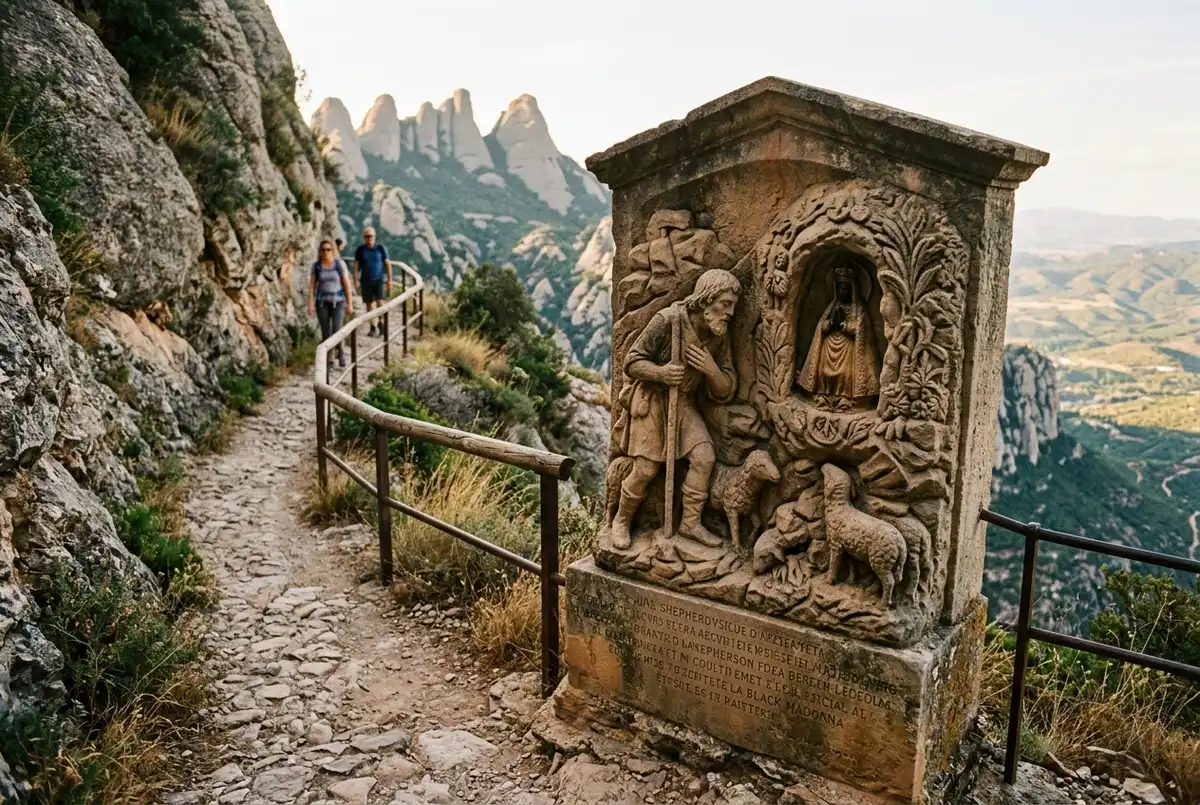
The most common version holds that shepherds tending flocks near Montserrat noticed strange lights and music coming from a cave partway up the mountain. Investigating, they found the statue already there, and when attempts to move her toward a nearby town repeatedly failed, it was taken as a sign she wanted to stay on the mountain instead. A chapel, and eventually the monastery, grew up around that spot.
I wouldn’t read this as a literal historical record, and neither does the monastery itself present it that way today. What I’d take from it is how deeply embedded the idea of divine choice is in the story: this isn’t a statue someone decided to place here for convenience. The legend insists she chose the mountain herself, which says a lot about how seriously this devotion has always been taken.
Check prices & dates
Ready to visit?
Book your tickets in advance: popular time slots sell out.
Why Is Santa Cova Specifically Tied to This Story?
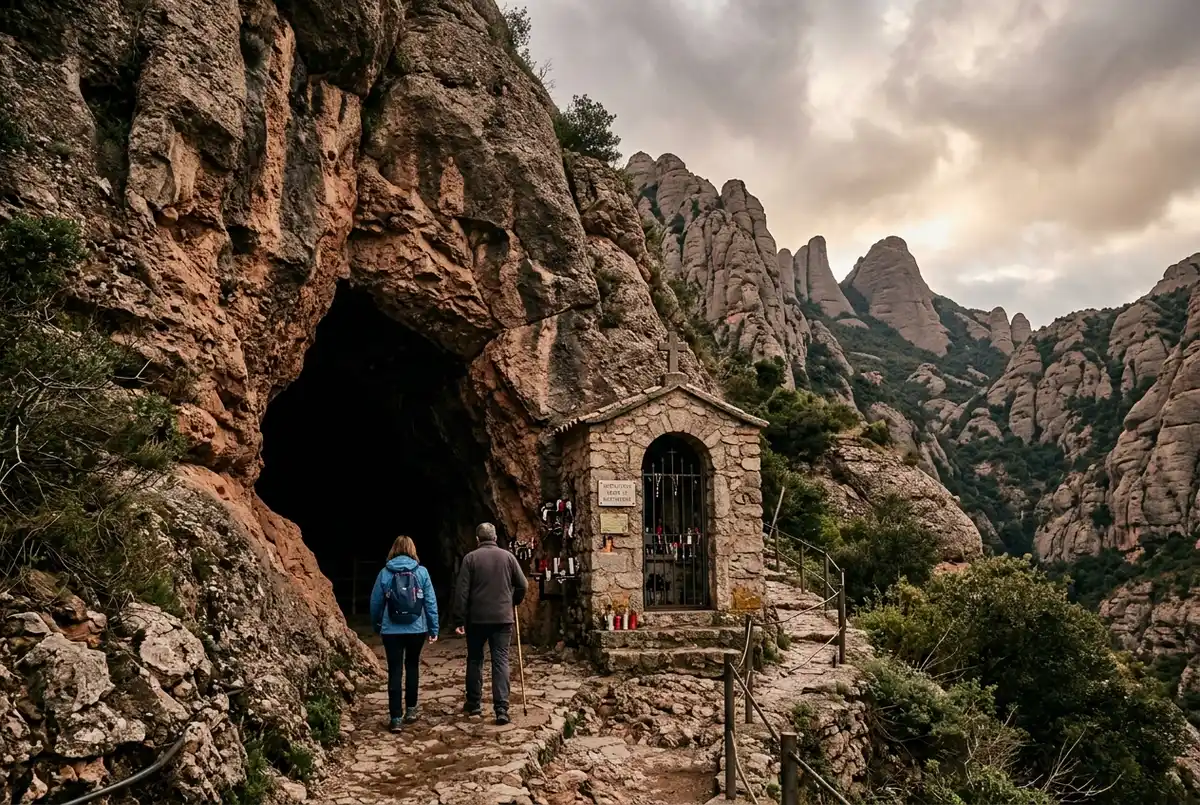
Santa Cova, meaning “holy cave” in Catalan, is the specific site tradition names as where the apparition happened. A path lined with chapels and sculptures, some designed by artists connected to the Catalan Modernisme movement, leads down from the monastery to the cave itself, turning the walk into a kind of devotional journey rather than a simple hike.
I’d genuinely recommend the walk down even if the legend itself doesn’t move you much. It’s a real, physical piece of the story you can stand inside, which is more than most legends offer. Our full Santa Cova guide covers the path and the chapel in more detail if you want to add the walk to your day.
What Miracles Are Credited to the Black Madonna?
Centuries of reported healings, protections, and favorable outcomes in battle have been credited to her intercession, the kind of devotional record common to major Marian shrines across Catholic Europe. Specific stories vary by era and source, and the monastery itself treats these as matters of faith and tradition rather than verified historical fact.
My honest take: I’d be skeptical of any specific miracle story presented as documented truth, the same way I’d be skeptical of similar claims at any pilgrimage site. What’s harder to dismiss is the sheer scale and duration of the devotion itself. Hundreds of years of people believing something is worth taking seriously as a cultural fact, even if you don’t take the individual miracle claims as literal.
What Is the Fertility Folklore Tied to the Black Madonna?
Among the traditions that have grown up around her, a specific fertility folklore exists: couples hoping to conceive have historically made pilgrimages here, sometimes timing visits around certain feast days, with the belief that her intercession can help. This sits alongside the broader healing and protection folklore rather than as a separate or more credible strand of it.
I wouldn’t present this as anything other than folk tradition, and I think most visitors who come across the story treat it the same way. It’s a window into how personally and specifically people have related to her over the centuries, wanting her help with the most intimate parts of their lives, not just abstract protection or good fortune.
What’s the Real Explanation for the Statue’s Dark Color?
Set the legend aside for a moment: art historians and the monastery generally point to centuries of candle smoke and the natural darkening of varnish and wood as the practical explanation for the patina. It’s the same kind of aging process seen on other old wood carvings and paintings across Europe, not a unique property of this specific statue.
I’d hold both explanations in mind without forcing a choice between them. The physical explanation tells you why she’s dark. It doesn’t tell you why that darkness became part of a name, a nickname, and nine centuries of devotion. Our piece on who the Black Madonna is goes further into her history and status as Catalonia’s patron if you want the fuller picture beyond the legend alone.
How Does the Legend Connect to the Monastery and the Choir Today?
The monks who maintain the monastery today trace their community’s purpose directly back to this apparition tradition, even as a modern Benedictine institution with its own working, contemplative life separate from tourism. The Escolania, the boys’ choir that sings daily in her honor, exists specifically to continue that devotional thread in music rather than as a performance act for visitors.
I’d read our guide to the monks of Montserrat and our Escolania guide together if you want to see how the 9th-century legend, the modern monastic community, and the daily liturgy all connect into one continuous tradition rather than three separate topics.
How Did the Legend Spread Beyond Catalonia?
Royal patronage played a big part. Spanish and Catalan monarchs made pilgrimages here over the centuries, and some credited military and personal outcomes to her intercession, which gave the shrine a prominence well beyond a purely local devotion. Written accounts and chronicles from medieval and early modern periods helped carry the legend into wider circulation, well before the printed guidebooks and now the internet took over that job.
I’d also credit the physical difficulty of reaching Montserrat historically with part of its mystique. A mountain shrine that took real effort to reach, before trains and cable cars existed, naturally built a reputation as somewhere worth the journey. That earned reputation is a big part of why the legend still draws visitors today, long after the trip itself became an easy half-day outing from Barcelona.
Does the Legend Appear Anywhere in Montserrat’s Art and Architecture?
Yes, consistently. The path down to Santa Cova is lined with sculptures and chapel stations depicting the apparition story, some created by sculptors connected to the Catalan Modernisme movement in the early 20th century, which means the legend isn’t just told in text, it’s built into the physical journey you can walk today. The basilica itself carries imagery referencing her discovery and the devotion that followed.
I’d slow down on that walk rather than treat it as a quick stop between the monastery and the bus. Each station along the Santa Cova path tells a piece of the story in stone, and rushing through misses most of what makes the walk worthwhile beyond just reaching the cave itself.
Should the Legend Change How You Experience the Visit?
I think it can, if you let it. Knowing the apparition story before you walk the Santa Cova path, or stand in the chamber behind the altar, adds a layer that a purely architectural or scenic visit misses. You’re not just looking at an old statue in a nice setting; you’re standing inside a story that has shaped an entire region’s identity for over a thousand years.
I wouldn’t force reverence if it’s not genuinely there for you, though. Plenty of visitors come purely for the mountain, the views, and the architecture, and that’s a complete and valid way to experience Montserrat too. Either way, I’d book a tour that at least gives you the option to see the statue and walk part of the Santa Cova path, since skipping both means missing the two physical anchors of this entire legend.
Frequently Asked Questions
Is the apparition legend considered historical fact by the Catholic Church?
No. It’s treated as pious tradition, a devotional story passed down and honored rather than a documented historical event. The Church distinguishes between doctrine and this kind of popular legend.
When did the apparition legend supposedly take place?
Most versions place it in the 9th or 10th century, though exact dates vary between sources, which is typical for legends passed down over such a long period before being written down.
Can you still visit Santa Cova today?
Yes. A marked path leads down from the monastery to the cave and its chapel, and it’s included in the itinerary of some guided Montserrat tours, including the stop at the shrine itself.
Is the fertility folklore still part of modern visits?
It’s less commonly referenced by guides today than the broader healing and protection tradition, but it remains part of the shrine’s recorded folklore for visitors who ask about it specifically.
If the legend and the real site behind it have you curious about seeing her in person, our guide to booking the Black Madonna visit itself lays out the queue times and which tours pre-book access for you.